Email + 4-digit code (Postmark emailed on submit for the 8 paying customers + rustyace super admin). Calls /api/gate (sends code via Postmark if known, verifies). Redirects known member to preserved OEM dashboard (with RSAi strikes + red warning) or pricing.
Introducing the RSAi™ Strike Precision System
Every Strike Calculated. Every Risk Defined.
VixShield's RSAi™ Strike Precision System AI-verifies every Iron Condor strike against the live volatility skew surface before it reaches you — then wraps it in the VIX Hedge Vanguard™ (ALVH) for layered drawdown protection. Three risk tiers. $5-wide spreads. Delivered at 3:05 PM CST, every market day.
Yesterday's Call. Today's Proof.
Tomorrow's signal drops at 3:05 PM CST. Will you be watching — or trading?
Live — Signals update every trading day at 3:05 PM CST. Subscribers get them first.
📖 All signals are for educational purposes only — not financial advice.
⚠️ Risk Disclosure: Not financial advice. Past performance is not indicative of future results. Trading involves substantial risk of loss. You can lose more than your initial investment. No live trade execution — signals only.
78-85%
Backtest Win Rate
10yr
Data Backtested
3:05 PM
Signal Time CST
3
Risk Tiers
👥 📊
29 updates daily
24/7 Market Intelligence Radio
Catch up on overnight markets in minutes. Ms Vixxy delivers hourly market updates around the clock — hit play and listen back-to-back while you work.
▶Auto-play back-to-back — start any flash and it chains through every update hands-free
Strikes selected. Risk defined. You execute — or automate.
No all-day screen watching. No gut-feel decisions. A signal arrives, you review the strikes, you place the trade. That's it.
01
Market Closes at 3:00 PM CST
The system processes end-of-day data, runs the EDR indicator, checks VIX levels, and computes optimal strike candidates across all three risk tiers.
02
RSAi™ Verifies Every Strike at 3:05 PM CST
Every strike candidate runs through the RSAi™ Strike Precision System — AI cross-checks each spread against the live volatility skew surface and wraps it in VIX Hedge Vanguard™ (ALVH) protection. Only verified signals reach you. Dashboard, email, and push notification.
03
Place Your Trade — or Automate It
Choose your risk tier. Enter the trade with your broker. Your max risk is defined before entry. $5-wide spreads: max risk ≈ $500 per spread.
⚡ Auto-Execute Ready™ — Supports automated execution via PickMyTrade + Interactive Brokers API. Connect your broker and signals become trades automatically. Automated execution requires separate PickMyTrade account and Interactive Brokers brokerage account. VixShield does not execute trades on your behalf. You maintain full control of your brokerage account at all times.
VIX Safety System
Know before you place. Every time.
Every signal arrives color-coded by VIX conditions. One glance tells you whether the trade is safe to place today — no guesswork, no second-guessing.
🟢
Green — OK TO PLACE
VIX is within favorable range. Iron Condor and ALVH hedge parameters are within historical norms. Standard position sizing recommended.
🟡
Yellow — HIGHER RISK, OK TO PLACE
Elevated volatility detected. Trade remains valid — consider reduced sizing. ALVH hedge layers are compensating for the extra risk.
🔴
Red — DO NOT PLACE
VIX conditions exceed safe thresholds. A signal was generated but placement is not recommended. Protecting capital is the trade today.
Color badges appear on every signal card in your dashboard. Included on all plans.
What Sets VIXShield Apart
The RSAi™ Strike Precision System difference.
Other iron condor services send you strikes. VixShield AI-verifies every strike against the live volatility skew surface first — then wraps it in layered VIX protection. No garbage spreads. No naked exposure. Just precision.
★ #1 Differentiator
RSAi™ Strike Precision System
Rapid Skew AI cross-checks every Iron Condor strike against the live volatility skew surface before it reaches you. AI-powered strike quality control. Nobody else has this. Every signal RSAi™ Verified.
#2 Differentiator
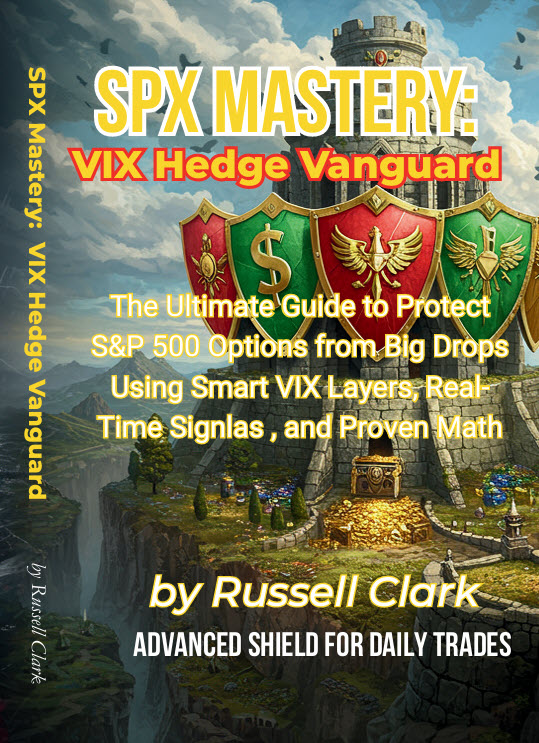
VIX Hedge Vanguard™ (ALVH)
The hedge layer inside RSAi™. Short, medium, and long-dated VIX calls protect every condor from volatility spikes. Cuts drawdowns in backtests. Built into every signal, every day.
Core Strategy
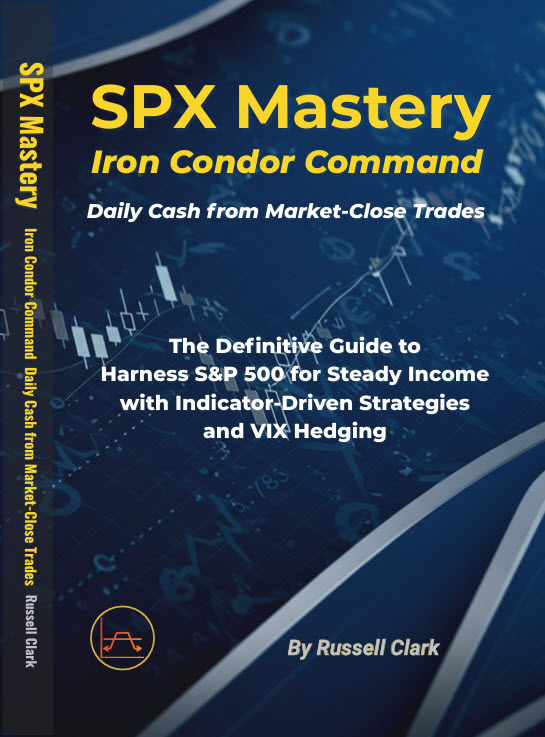
Iron Condor Command
Daily market-close Iron Condors using the EDR indicator. $5-wide spreads. Capitalizes on SPX's predictable small moves, with 90% of trading days under 1.5% range.
Recovery System
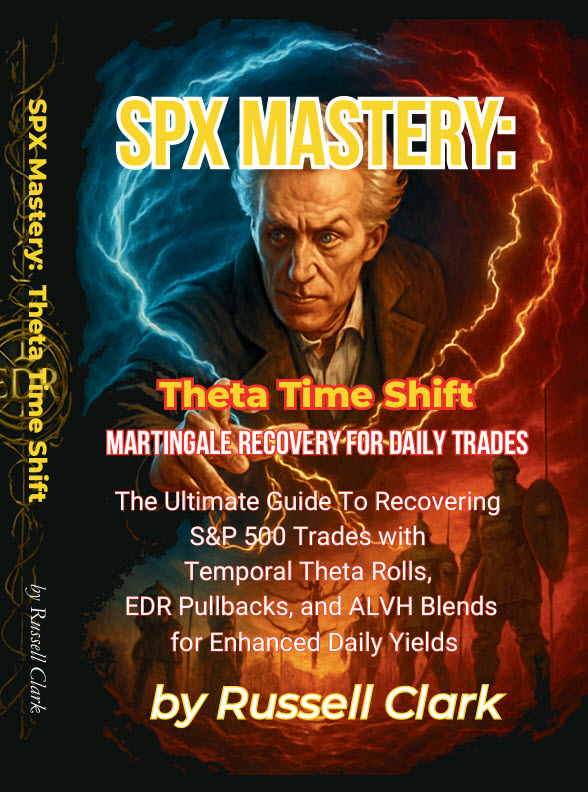
Theta Time Shift
Martingale recovery through temporal theta rolls. When a trade moves against you, the system shifts time in your favor using calculated roll mechanics.
Income Amplifier
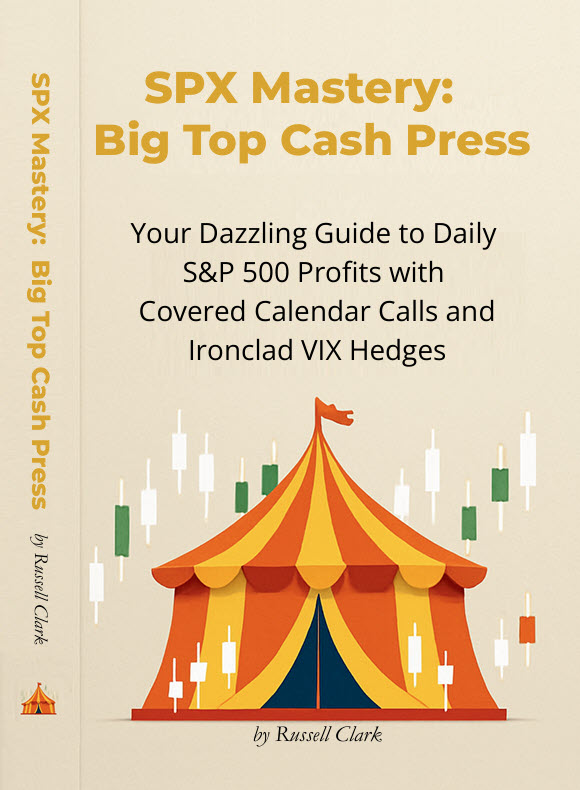
Big Top Cash Press
Covered Calendar Calls layered with VIX hedges for additional theta income. Pairs with Iron Condors for diversified daily premium collection.
Why Members Stay
Methodology you can verify. Risk you can define.
Every claim is traceable to published backtests and Russell Clark's four-book series. No mystery black box. No guru signals.
✓Every signal powered by RSAi™ Strike Precision System — AI-verified against live skew before delivery
✓ Transparent methodology — every rule is in print
✓ Every trade is defined-risk before entry
✓ Built on published, verifiable strategies
✓ 3:05 PM CST — predictable, every market-open day
✓ Daily podcast + YouTube + 2,000-word blog post — every trading day
Every signal runs through the RSAi™ Strike Precision System — our proprietary Rapid Skew AI engine that cross-checks every Iron Condor strike against the live volatility skew surface and applies VIX Hedge Vanguard™ (ALVH) protection before the signal reaches you. No garbage spreads. No naked exposure. Every strike calculated. Every risk defined.
~18 Iron Condor strikes/month. Plus 24/7 market intelligence.
Members stay because of the amount of accurate, timely data we deliver. VixShield isn't just an Iron Condor signal service — it's a real-time market intelligence platform covering Gold, Forex, Crypto, Commodities & Geopolitical events via TradingView alerts. The signals are the anchor. The 24/7 coverage is why they stay.
~18 strikes/month based on typical monthly US equity trading days when markets are open.
What Members Are Saying
“
I signed up for Iron Condors but the real-time Gold and Forex alerts keep me ahead of every macro move. Ms Vixxy calls it before the news cycle catches up.
V
VixShield Member
Verified Subscriber
★★★★★
“
Getting 18 Iron Condor strikes a month PLUS breaking market alerts on Gold, USD/JPY, crypto? This isn't just signals — it's a trading desk in my pocket. Nothing else comes close.
M
VixShield Member
Verified Subscriber
★★★★★
“
The Flash alerts caught the Gold spike and USD/JPY move before my trading desk even saw it. The breadth of coverage — SPX, commodities, geopolitics — is what separates serious tools from toys.
T
VixShield Member
Verified Subscriber
★★★★★
⚠️ Member feedback is anecdotal and not indicative of trading results. Not financial advice. Past performance is not indicative of future results. Trading involves substantial risk of loss. ~18 strikes/month based on typical monthly US equity trading days when markets are open.
Daily Content Pipeline
Every market day. Every format.
Competitors send you an email. VIXShield delivers the full analysis as a podcast, YouTube video, and deep-dive blog post — every single trading day.
🎙️
Daily Podcast
Morning Outlook + Market Close Recap — five episode types across the week. Monday fresh starts, Friday week-in-review, Thursday VIX risk focus. Listen while you commute.
▶️
YouTube Videos
Full market analysis published to YouTube daily. Watch the same breakdown the signal is based on — SPX technicals, VIX read, sector rotation — before you trade.
📝
Deep-Dive Blog
1,500–2,500 word daily market analysis. SPX technical breakdown, VIX levels, sector rotation, data tables. Built to be read, bookmarked, and referenced later.
🔔
Push Alerts
Browser and email notifications fire the moment the signal drops at 3:05 PM CST. You never miss a signal — even if you're away from the dashboard.
Podcast, YouTube, blog, and push alerts included on all plans — Basic through Premium.
Live Track Record
Real results. No cherry-picking.
Every signal. Every outcome. Updated daily after market close.
⚠️ Hypothetical performance — not actual trades. Past performance is not indicative of future results. Trading involves substantial risk of loss. Not financial advice.
Daily Iron Condor signals at 3:05 PM CST — RSAi™-verified strikes, VIX protection built in. The Masterclass teaches you the methodology behind every trade. You stop following blindly and start understanding.
⚠️ Not financial advice. Past performance is not indicative of future results. Trading involves substantial risk of loss.
★ Best Value
SPX Academy Masterclass
$497 one-time
Pay once. Learn forever. First 12 months of signals included.
💰 $49/mo × 12 = $588 → You pay $497 + get the entire Masterclass FREE You save $91 vs. subscribing monthly for a year. 252 trading sessions. One payment. Every signal. Every market day.
Full 11-module SPX Academy Masterclass
Ms Vixxy — personal AI Tutor (module-gated progression)
12 months Basic tier included ($588 value)
⚡ Automated Trade Execution — PickMyTrade + IBKR integration included. Set up once, signals fire for 12 months straight.
Auto-execution is performed via your connected PickMyTrade + IBKR account. VixShield does not hold funds or act as a broker-dealer. You maintain full control. Trading involves substantial risk of loss.
⚠️ Not financial advice. Past performance is not indicative of future results. Trading involves substantial risk of loss.
14-Day Free Trial
Pro
$97/mo
Free for 7 days, then $97/mo. Cancel anytime.
Full dashboard, trade journal, backtester, and weekly strategy recaps. For traders who want the edge.
Everything in Basic, plus:
Priority RSAi™-verified signal delivery
⚡ Automated Trade Execution — PickMyTrade + IBKR integration (auto-execute your Iron Condors at signal time)
Auto-execution is performed via your connected PickMyTrade + IBKR account. VixShield does not hold funds or act as a broker-dealer. You maintain full control. Trading involves substantial risk of loss.
⚠️ Not financial advice. Past performance is not indicative of future results. Trading involves substantial risk of loss.
⚠️ Not financial advice. Past performance is not indicative of future results. Trading involves substantial risk of loss.
The Strategist
Built by Russell Clark.
35 years in healthcare taught Russell Clark the value of systematic protocols. 20 years of trading taught him how to apply that discipline to the S&P 500. The result: a four-book series and a methodology trusted by traders who want income, not excitement.
From ER nursing to Army Reserves to co-founding Nashville's top weight loss clinic, Russell built his career on calm under pressure. VIXShield is that same discipline — automated, RSAi™-verified, and delivered to your screen every day at 3:05 PM CST.
As an Amazon Associate, I may earn a small commission if you purchase through these links — at no extra cost to you.
Go Deeper
Learn the Full SPX Mastery Strategies
The signals on VIXShield are built directly on strategies from these published SPX Mastery books by Russell Clark, NP. Dive deeper into the math and methodology:
314 options trading terms defined by Russell Clark — from ALVH and EDR to Temporal Theta Martingale and Iron Condor Command. The authoritative reference for every framework in the SPX Mastery series.
RSAi™ — Every Strike Calculated. Every Risk Defined.
The RSAi™ Strike Precision System verifies every Iron Condor strike against the live skew surface. VIX Hedge Vanguard™ wraps every trade in layered protection. Russell Clark's methodology, AI-verified, delivered at 3:05 PM CST. You don't need to rush — let the system execute for you.
⚠️ Not financial advice. Past performance is not indicative of future results. Trading involves substantial risk of loss. You can lose more than your initial investment. No live trade execution — signals only.
⚠️ Important Risk Disclosure
Not financial advice. Past performance is not indicative of future results. Trading options involves substantial risk of loss. You can lose more than your initial investment. VIXShield provides trading signals only and does not execute trades on your behalf. All backtested performance data is hypothetical and does not guarantee future results. The Adaptive Layered VIX Hedge (ALVH) strategy reduces risk in backtests but does not eliminate the possibility of losses. Consult a licensed financial advisor before making investment decisions. Created with strategies from SPX Mastery books by Russell Clark, NP & options trader – Iron Condor Command, VIX Hedge Vanguard, and more.