Hey folks, it's Russell Clark here. Saturday Deep Dive, 6:33 PM Chicago time. Buckle up, because this week was one for the books.
The S&P 500 closed the week at seventy four seventy three. Yeah, you heard that right. Seventy four seventy three. The VIX sitting at sixteen point seven. Gold at four thousand five hundred forty seven dollars. Oil at ninety eight dollars. And Bitcoin... seventy four thousand six hundred eighty three.
This market is sending signals so loud they're screaming, yet half of Wall Street is still pretending everything's fine. Today we're doing a full forensic autopsy on the week that just passed. What actually worked, what completely blew up, where the institutions got caught with their pants down, and most importantly... the brutal lessons we better learn before the next leg unfolds.
Let's start with what worked.
Energy. Again. While everyone was obsessing over AI theater and tech valuations, the oil market quietly reasserted itself as the most important asset on Earth. Ninety eight dollars oil isn't some anomaly. It's the new reality when you combine record Chinese imports, strategic reserve releases finally ending, and a global economy that still runs on hydrocarbons whether Elon Musk tweets about it or not.
The commodity complex as a whole showed remarkable strength. Gold at four thousand five hundred forty seven isn't just a number. It's a vote of no confidence in the financial system that's been papered over for fifteen years. When gold rips like this while the S&P grinds higher, it's not bullish. It's a divergence that historically ends in tears.
Bitcoin at seventy four thousand six hundred eighty three also worked, but not for the reasons most crypto bros think. This wasn't some decentralized revolution narrative winning. This was institutions desperately looking for an asset that can't be printed into oblivion. They just haven't realized yet that governments can still regulate, tax, and ultimately control the on-ramps and off-ramps.
Now... what failed this week.
The everything bubble in technology finally showed its first real cracks. Not the garden variety 2% dip that gets bought within 48 hours. I'm talking about the kind of rotation where money is actually leaving names that have carried this entire market for two years. The concentration risk is off the charts. When seven stocks account for most of the S&P's gains for the entire year, you're not investing. You're playing musical chairs with institutional money.
The bond market sent up multiple flares this week that nobody wants to talk about. Real yields are doing things they haven't done since before the GFC. The treasury market is starting to clear at levels that suggest buyers are becoming scarce. That's not a nothingburger. That's the foundation everything else is built on beginning to shake.
Small caps got absolutely destroyed relative to the mega caps again. The Russell 2000 continues to be the most hated asset in America while the S&P sits at all-time highs. This isn't healthy. This is the market equivalent of a bodybuilder with massive arms and a chicken legs. Eventually the imbalance causes the whole system to collapse.
Let's talk about the institutional traps. Because this week was absolutely loaded with them.
First trap: the 'soft landing' narrative. Every bank report, every strategist note, every talking head on CNBC has been pounding the table on the immaculate soft landing. Meanwhile, the data is starting to show cracks everywhere. The institutions that piled into the 'Fed will cut six times in 2025' trade are about to get their heads handed to them when reality shows up.
Second trap: the AI hype cycle reaching religious levels. I'm not saying artificial intelligence isn't transformative. I'm saying the valuations being assigned to companies that simply say the word 'AI' in their earnings calls have reached dot-com bubble territory. When your local car dealership adds AI to their name and their stock doubles, you've left the realm of investing and entered full mania.
Third trap: the yen carry trade that refuses to die. Japanese institutions and global hedge funds have been borrowing in yen at basically zero and buying everything else for years. The Bank of Japan is now serious about normalizing policy. When that carry trade finally unwinds, it's going to make 1998 look like a dress rehearsal. This week gave us another small taste of what's coming.
The biggest trap of all might be complacency. The VIX at sixteen point seven while the S&P sits at seventy four seventy three has created this false sense of security. Markets don't blow up when the VIX is at thirty five. They blow up when everyone thinks risk has been conquered.
Key lessons from this week. Write these down.
Lesson number one: Liquidity is still the dominant variable. Everything works until it doesn't. The moment the liquidity tide turns, all these fancy narratives collapse. We're seeing the first signs that the liquidity environment is changing. Pay attention to the dollar. Pay attention to funding markets. These are the canaries.
Lesson number two: Concentration risk kills. The market has never been this concentrated at these valuations in history. Not in 1929. Not in 2000. The math is getting ridiculous. When the leaders start to roll over, the catch-up trade in everything else will be violent in both directions.
Lesson number three: Real assets are reasserting their dominance. Gold at four thousand five hundred forty seven, oil at ninety eight dollars, Bitcoin acting like digital gold. This isn't random. This is what happens when trust in fiat systems and central banks erodes. The smart money isn't waiting for CNBC to tell them it's okay to own hard assets.
Lesson number four: The political cycle is starting to matter more than the business cycle. We're heading into a presidential election year with geopolitical tensions at levels not seen since the 1970s. Markets hate uncertainty, and we're swimming in it. The next six months could see volatility that makes this week's action look like a Sunday picnic.
Lesson number five: Your time horizon matters more than your conviction. If you're investing for the next ten years, some of these dislocations are opportunities. If you're investing for the next ten months, you better have a plan for how to handle a potential 25-30% drawdown that could come out of nowhere.
I want to get personal for a minute.
I've been doing this for a long time. I've seen euphoria. I've seen capitulation. What we're experiencing right now feels like the most dangerous phase of all: euphoric denial. The kind of environment where everyone knows things are stretched but they've convinced themselves this time is different.
The institutions aren't dumb. They see the same things I do. But they're trapped by their mandates, their benchmarks, and their career risk. It's a lot easier to ride the S&P to seventy four seventy three than it is to explain to your clients why you missed the melt-up while sitting in cash or commodities.
That's how bubbles reach their ultimate conclusion. Not because everyone is delusional, but because the incentives are completely misaligned with reality.
So where do we go from here?
I expect more of the same until we don't. More grinding higher in the indices. More hand-wringing about concentration. More ridiculous AI valuations. More calls for the Fed to cut. Until suddenly the bond market rips higher, or oil breaks above one hundred and ten, or some geopolitical event none of us are pricing in correctly blows up the complacent positioning.
The week ahead is going to be critical. We've got more earnings from the big tech names that have been carrying this entire market. We've got oil testing resistance. We've got gold that refuses to correct meaningfully. These are the pressure points.
My advice hasn't changed, but it feels more urgent than ever. Have a plan. Don't get married to narratives. Respect the price action even when it doesn't make sense to you. And for God's sake, diversify into assets that have real scarcity and real utility in the world that's actually coming, not the one Wall Street is still pretending exists.
The S&P at seventy four seventy three feels invincible until it doesn't. The VIX at sixteen point seven feels calming until it spikes to forty in a week. Gold at four thousand five hundred forty seven looks expensive until you understand what it's really pricing.
This week showed us the cracks. Most people will ignore them. The smart ones won't.
That's it for this week's Deep Dive. If you're not already following the work, what are you waiting for? The times are getting interesting, and interesting times reward preparation over hope.
This is Russell Clark. Stay sharp out there.
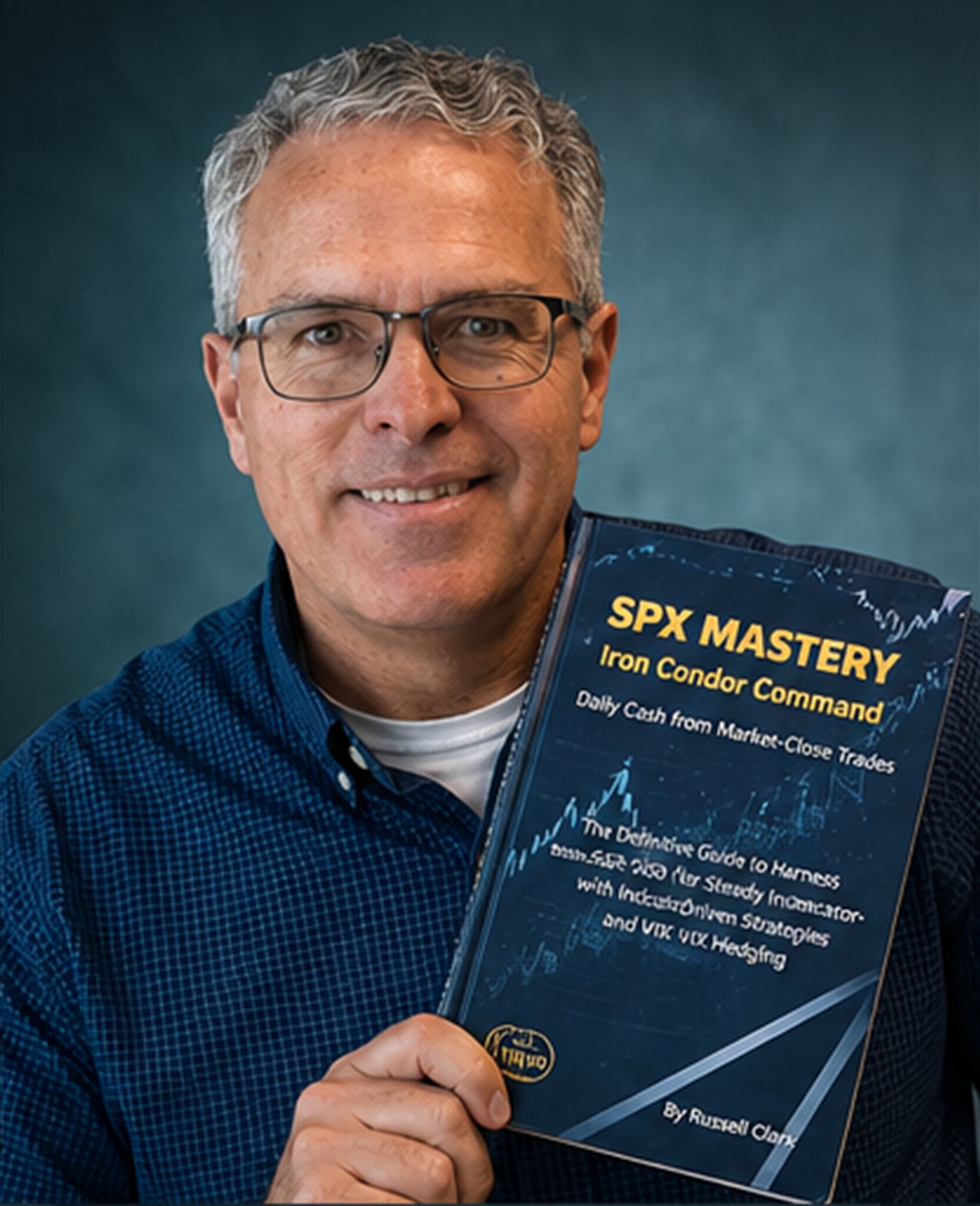
The Brutal Week Wall Street Doesn't Want You to Understand
Run ID: russell-1779579208604
⚡ Condor Studios